
A pilot from Henrico will bring the Artemis astronauts home (Martinette '11)
Article appeard on Friday, 10 April :
Around 8 p.m. Friday night, the NASA astronauts of the Artemis II mission will barrel into the Earth's atmosphere at a speed of nearly 25,000 miles per hour. The Orion capsule will burn its heat shield, deploy parachutes and, if all goes to plan, splash safely into the Pacific Ocean.
That's when a Navy pilot from Henrico County, Lt. Cmdr. Sam Martinette, and his team will recover the four astronauts from the water and complete their 500,000-mile mission.
Martinette, 37, graduated from Mills Godwin High School, swam at the United States Naval Academy, and has years of experience flying helicopters and lifting service members out of the water.
But this mission, "it definitely doesn't feel like any other," Martinette said in an interview while aborard the USS John Murtha, the amphibious transport dock assigned to the mission. "It's really just exciting knowing what you're a part of."
What he's a part of, the Artemis II mission, is the first manned rocket to the moon in more than 50 years, a trip that took humans farther into space than ever before.
As a kid, Martinette was never too scared to try something, said his parents, Louis and Marie Martinette, like riding a zip line down a mountain at age 8. Sometimes, his fearlessness resulted in falls, stitches and broken bones. But he was undeterred.
He started swimming for Nova of Virginia Aquatics, and the sport gave him a center of gravity, discipline and a social life, Louis said. It also meant waking up early he was in the pool by 4:30 a.m. each day.
He became the Richmond-area's best long-distance swimmer as a senior in high school, and he sought colleges where he could swim at the NCAA level. The U.S. Naval Academy offered him such an opportunity. It was a natural fit, considering Martinette's grandfather, Capt. Samuel L. Collins, graduated there in 1939 and served in World War II.
Navy won him over, and Martinette reported to Annapolis.
"Army never had a chance," Louis Martinette said.
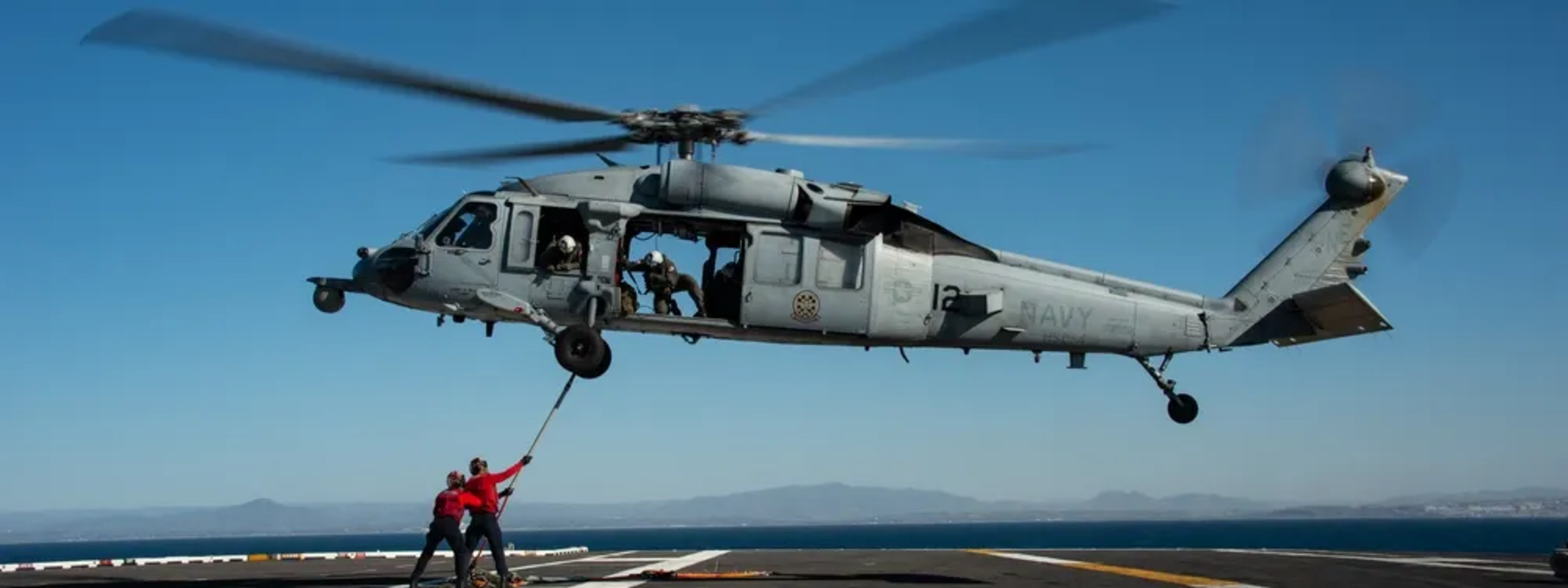
He graduated in 2011, went to flight school and pursued flying helicopters. Although many student aviators do not achieve their desired assignments, Martinette got exactly what he wanted. He pilots a versatile helicopter called the MH-60S Sea Hawk, used in warfare, disaster relief, and search and rescue. Colleagues gave him the call sign "Kit Kat." Asked how he earned the nickname, Martinette said, "I'm a snack."
Search and rescue is one of Martinette's primary responsibilities. When jets take flight, Martinette's squadron, Helicopter Sea Combat Squadron 23, is often on alert, ready to deploy if a pilot must eject. Those skills are a reason why U.S. officials chose him for this mission.
'I got lucky' to get this assignment
"One reason why Navy helicopters are a great asset for this is because we're already ready for it," Martinette said.
The squadron already worked with NASA for years developing procedures on how to monitor space capsules during reentry and how to best recover astronauts from the water. One factor in landing this assignment, he said, was being in the right place at the right time.
Martinette won't just pilot the helicopter. He will lead a detachment assigned to the John Murtha, which includes four aircraft and roughly 70 people. How was Martinette chosen to lead them?
"I got lucky," he said.
Unlike most search and rescue missions, in this case Martinette knows in advance where he's going and who he's trying to recover. His training for the mission began months ago. He visited NASA's neutral buoyancy lab a pool that simulates a zero-gravity environment at the Johnson Space Center in Houston, where divers practiced using floating devices and harnesses. In January, his detachment took a mock capsule to the ocean, where divers practiced approaching, recovering crew members and hoisting them up to the helicopter. They ran drills in the daylight and in the dark.
'You're prepared for everything'
Around 8 p.m. Eastern time Friday, NASA authorities expect the Orion capsule to splash down about 250 miles off the coast of San Diego. Four helicopters will depart the Murtha two equipped with special cameras will climb to higher altitude to track the capsule as it plummets toward Earth. The aircraft will collect data for NASA to study.
The two other helicopters will stand down about 10 miles from the splash site. The long distance is to ensure they avoid being hit by debris as the heat shield burns up, pieces of the capsule will fall into the ocean.
Once the air is clear, the two helicopters will fly to the site of the splashdown and circle it from a distance of about 100 yards. Divers will approach on inflatable boats, wrap a floatation device around Orion and set up a life raft nicknamed the "front porch." The divers will open the hatch and check the medical condition of the four astronauts.
From the helicopter, a rescue swimmer will descend 40 feet on a hoist to the life raft. The crew below will hook one astronaut to the rescue swimmer, and the helicopter will heave them back into the aircraft. One by one, the helicopters will lift each astronaut into the air.
Then the helicopters will ferry the astronauts back to the John Murtha for medical care. Once the astronauts are cleared, Martinette will fly them back to Naval Base Coronado in San Diego. Crew members will secure the Orion capsule and bring it inside the ship.
Martinette and his crew have prepared for every contingency. If weather is bad, NASA can relocate the splashdown site to an area with fairer skies. If the capsule lands off course, there are pararescue specialists capable of performing recovery anywhere on the globe. If something happens to Martinette's helicopter, a backup is ready to go at Coronado.
"You're prepared for everything, basically," he said.
There's a lot of positive sentiment on the John Murtha this week, Martinette said. The crew members all grew up hearing about NASA and watching the space shuttle, he said. Now, they're all part of the team, and the moment is about to arrive.
When NASA talks about its astronauts, it usually refers to them as "our astronauts," in a way to suggest that the people going into space and risking their lives belong to you, whether you're part of mission control or selling merchandise in the NASA gift shop. No matter the job, the idea goes, you're part of the team.
"It's been very smooth," Martinette said of the work on the ship this week, "because I have a team that's handling everything."
For Martinette, the team extends to the family and friends who watch his three kids Bradlee, 12; Walker, 11; and Scarlett, 8 while he's away from their home in San Diego.
"He can't do this without his people," Louis Martinette said.
There's a famous line Louis Martinette thinks about. When President John F. Kennedy gave his famous speech in 1961, challenging NASA to put a man on the moon by the end of the decade, he didn't just dare NASA to land a man on the moon but also return him safely to Earth. In other words, the mission doesn't end until the astronauts are back home.
"Until they deliver the astronauts safely," Louis Martinette said, "it's not over."
The Richmond Times-Dispatch: Web Edition Articles (Virginia)
April 10, 2026 Friday Distributed by Newsbank, Inc. All Rights Reserved
Copyright 2026 Richmond Times-Dispatch, Richmond, VA
Byline: Eric Kolenich
Learn more about the HSC-23 'Wildcards'.
BZ '11!